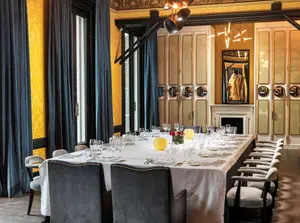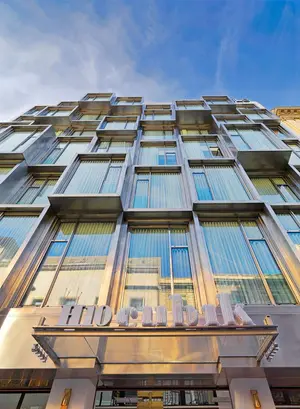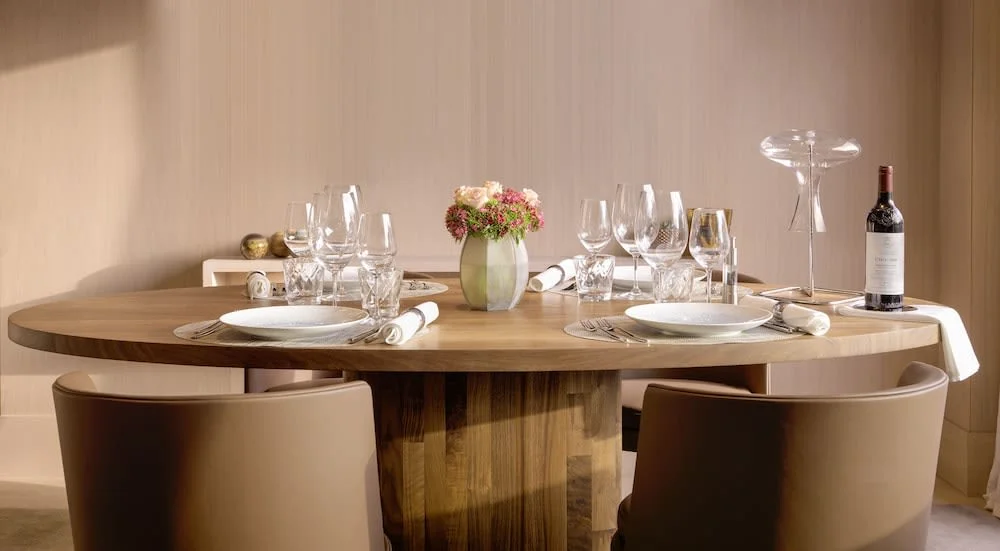
The One Barcelona GL
When you book The One Barcelona GL in Barcelona, Spain through our Preferred Platinum partnership, your stay includes daily breakfast, room upgrades and a $100 hotel credit.
Exclusive Booking Perks
- Breakfast for Two Daily
- $100 Hotel Credit per Stay (to be used on services such as spa, dining, or selected amenities valued at $100 or more)
- Hotel Welcome Amenity
- Room Upgrade (subject to availability)
- Priority Check-in and Check-out (subject to availability)
Location
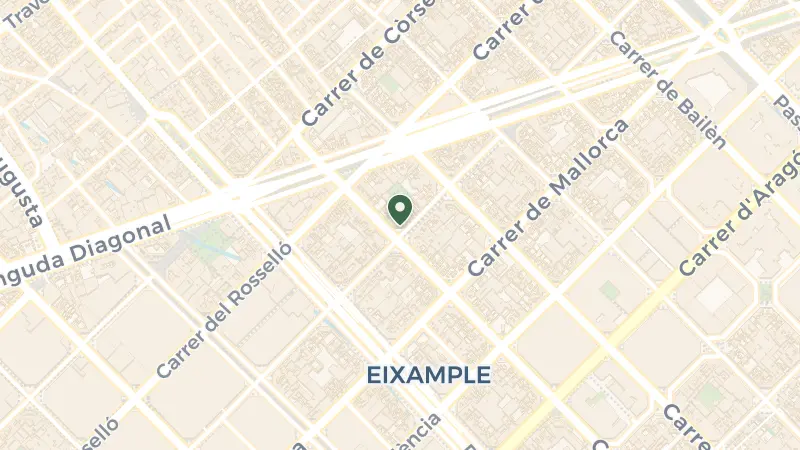
L'Eixample unfolds in orderly blocks north of the old city, its wide boulevards and chamfered corners a deliberate counterpoint to the Gothic Quarter's medieval tangle. The air here carries the hum of traffic softened by plane trees, the clatter of café chairs on broad pavements, the occasional drift of incense from a modernist doorway. This is Barcelona's 19th-century expansion, where Ildefons Cerdà's grid brought order and light to a bursting city, and where Antoni Gaudí's works punctuate the streetscape like fever dreams rendered in stone and tile.
La Pedrera, Gaudí's undulating Casa Milà, stands just metres away, its rooftop chimneys twisting against the sky. The Eixample cradles much of the city's modernist heritage: curvaceous façades, stained glass, wrought iron that seems to grow rather than bend. Walk these blocks and the architecture alone tells the story of Catalonia's industrial wealth and cultural assertion in the decades before the Spanish Civil War.
Barcelona-El Prat Airport lies 13 kilometres southwest; the Aerobús express shuttles between terminals and Plaça Catalunya in roughly 35 minutes, depositing arrivals at the edge of the old city, a short taxi ride from l'Eixample's grid. The city's origins reach back to Phoenician or Carthaginian traders; by the Middle Ages it was capital of the County of Barcelona, then the Crown of Aragon's economic heart, before centuries of Castilian overshadowing. That tension, between Catalan identity and Spanish state, still pulses through the language, the flags, the street names.
On-site, Xavier Pellicer serves vegetable-forward cuisine that reads like a manifesto: seasonal, small-producer, fiercely local. Expect plates where a single heirloom tomato or wood-roasted turnip anchors the composition, technique quiet but exacting. For a more rarefied experience, Lasarte, 300 metres away, holds three Michelin stars and channels Martín Berasategui's precision into dishes that layer texture and temperature with surgical intent. Book a table at Disfrutar, just over a kilometre south, where three alumni of Ferran Adrià's El Bulli conjure creative whimsy: the menu shifts constantly, but expect courses that tease, surprise, and demand your full attention. The restaurant's waiting list stretches long; reserve weeks ahead.
Within walking distance, the Palau de la Música Catalana, roughly a kilometre east, explodes in Lluís Domènech i Montaner's art nouveau exuberance: a concert hall where stained glass and tilework transform a steel frame into something close to ecstasy. Mercat de la Concepció, half a kilometre away, offers a more grounded pleasure: fishmongers, cheese stalls, and fruit piled in jewel-bright pyramids under iron vaults. For a longer excursion, Gaudí's Sagrada Família, two kilometres northeast, remains unfinished after more than a century, its towers spiralling toward a completion date that keeps receding. The beaches at Somorrostro lie three kilometres southeast, where the Mediterranean laps against sand and the Port Olímpic's twin towers frame the horizon.
Summer arrives fierce and bright. July and August push temperatures near 28°C, the streets slowing to siesta pace by mid-afternoon, the light turning honey-thick over stone façades. Evening brings relief and crowds spilling onto terraces until well past midnight. This is peak season; expect queues at museums and a city swollen with visitors.
Spring and autumn offer the most generous conditions: April through June and September through October balance warmth with movement, temperatures in the high teens to low twenties, the city's rhythm less frantic. October sees the most rain, but showers tend to blow through quickly, leaving the air scrubbed clean and the light sharp.
Winter is mild by northern European standards, daytime highs around 13°C in December and January, but the Mediterranean wind can bite. The city feels more like itself in these months, its museums and restaurants reclaimed by locals, the pace slower, the light slanting low and golden across empty plazas.
Frequently Asked Questions
Free service · No obligation
Request a Quote 17 Bib Gourmand