La Sultana Marrakech
When you book La Sultana Marrakech in Marrakech, Morocco through our Virtuoso partnership, your stay includes daily breakfast, room upgrades and a $100 hotel credit.
Exclusive Booking Perks
- Upgrade on arrival, subject to availability
- Daily Full breakfast for up to two guests per bedroom, served in the restaurant and via in-room dining
- $100 USD equivalent Resort or Hotel credit to be utilized during stay (not combinable, not valid on room rate, no cash value if not redeemed in full)
- Early check-in / Late check-out, subject to availability
Location
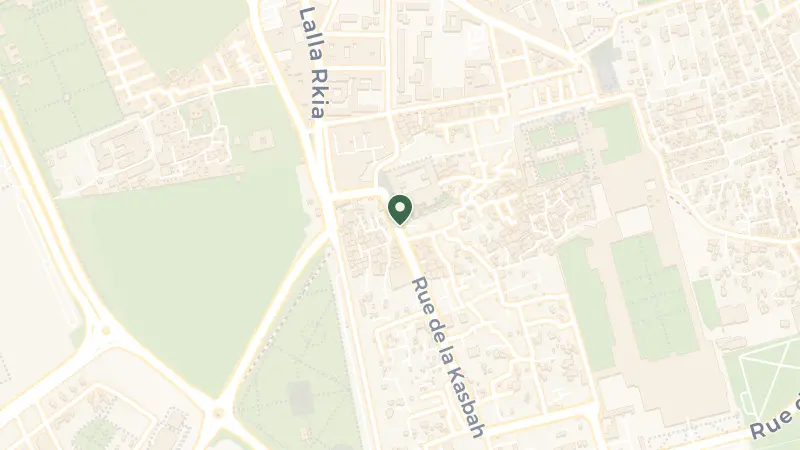
La Sultana Marrakech sits in the Zone Touristique de l'Agdal, a quieter district south of the medina that offers proximity to the city's labyrinth without the relentless energy of its core. The property occupies a corner where the ochre walls of the old city meet wider boulevards lined with date palms, a position that allows guests to slip into the medina's heart within minutes while returning to seclusion at will.
Marrakesh unfolds as a city of contrasts: the call to prayer echoing over terracotta rooftops, the scent of mint and grilled lamb drifting from street-side grills, the clatter of donkey carts navigating alleyways too narrow for cars. Founded in 1070 by the Almoravids, the city earned its nickname, the Red City, from the sandstone ramparts Ali ibn Yusuf raised in the twelfth century. It served as an imperial capital under multiple dynasties, each sultan layering monuments and gardens onto the medina, which UNESCO inscribed as a World Heritage Site in 1985. The Saadian rulers of the sixteenth century left the most sumptuous mark, commissioning palaces and tombs that still define the city's architectural splendour.
The medina lies less than two kilometres north, a dense weave of souks, riads, and workshops where leather tanners, metalworkers, and spice merchants carry on trades that predate the Protectorate. Marrakesh Menara Airport is five kilometres southwest, a quick taxi ride through palm groves and modern roundabouts.
The medina draws visitors into its folds like a living organism. Start at Jemaa el Fna, the sprawling square where acrobats, snake charmers, and storytellers perform beneath a haze of cooking smoke, less than a kilometre from the property. By day, the souks radiate outward: the Olive Souk for gleaming jars of preserved lemons and argan oil, Souq El Kessabine for leather babouches stitched by hand, Bijouterie Ouadia for silver Berber jewellery. The medina's narrow passages open onto sudden courtyards where fountain tiles catch the light. Book a guide for the first walk; the medina rewards those who understand its layered history.
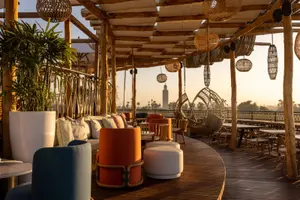
Beyond the walls, the foothills of the Atlas Mountains beckon. Golf courses dot the plain: Marrakech Golf City lies under three kilometres south, while The Montgomerie Marrakech stretches across the countryside slightly farther west. For wilderness, the Rmila reserve sits twelve kilometres out, a pocket of scrubland where migratory birds rest. Return to the property for mint tea on a rooftop terrace as the sun drops behind the Koutoubia minaret, the city's most recognizable silhouette.
Winter arrives with crisp mornings and brilliant light, temperatures hovering near eighteen degrees by midday and dipping close to freezing after dark. February brings occasional rain that slicks the medina's cobblestones, but clear afternoons follow. The souks feel less crowded, the air sharp with woodsmoke from braziers.
Spring blooms fierce and short. March warms the city, and by May the heat begins its climb, orange trees scenting the gardens. June marks the threshold: temperatures leap into the thirties, and by July and August, the city bakes under a white sky, the mercury pushing past thirty-six degrees. Mornings are the only tolerable hours for walking; locals retreat indoors until dusk.
Autumn restores balance. September softens the heat, October cools the evenings, and November feels almost European, the medina alive with harvest produce. This is the season to linger in courtyards, to taste tagines without wilting, to understand why Marrakesh has drawn travelers for a thousand years.
Frequently Asked Questions
Free service · No obligation
Request a Quote