JOALI Maldives
When you book JOALI Maldives in Raa Atoll, Maldives through our Virtuoso partnership, your stay includes daily breakfast, room upgrades and a $150 hotel credit.
Exclusive Booking Perks
- Upgrade on arrival, subject to availability
- Daily Full breakfast for up to two guests per bedroom, served in the restaurant
- Welcome Amenity: Fruit basket and a bottle of champagne
- $150 USD equivalent Food & Beverage credit to be utilized during stay
- Complimentary 30-minute spa treatment for up to two adults, once during stay
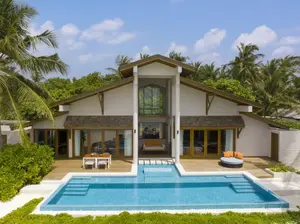
- Bookings in our Three or Four Bedroom Residences will also receive:
- CIP arrival and departure as per villa capacity
- One complimentary tasting (whiskey, wine, gin, sake, etc.) OR one family cookin...
- A 30-minute Paddle tennis session
- A 60-minute spa treatment
- Early Check-In / Late Check-Out, subject to availability
Location
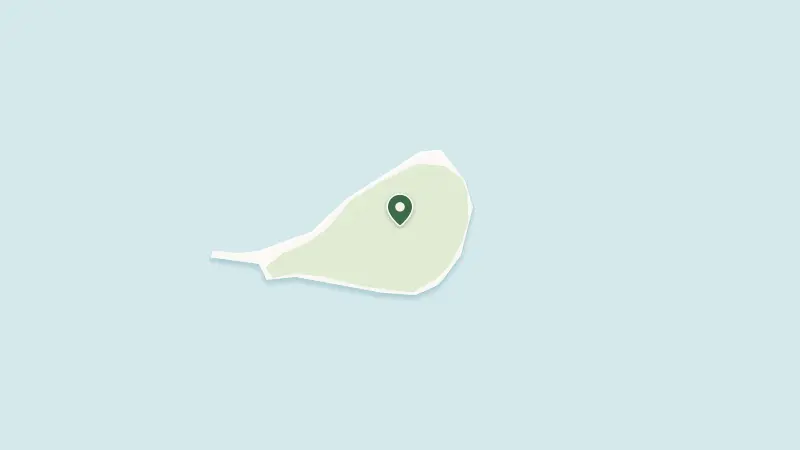
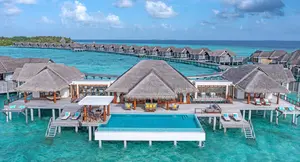
Raa Atoll marks the beginning of the Maldives' east-west divide, a stretch of the Indian Ocean where coral patches thicken the lagoon and the western fringe dissolves into a series of oval reefs scattered across impossibly blue water. This is Northern Maalhosmadulu Atoll, 56 kilometres from north to south, where the density of giri (coral heads awash or just submerged) creates a labyrinth of turquoise shallows and sudden deep channels. The atoll cradles the highest number of inhabited islands in the country, yet the distances between them feel oceanic.
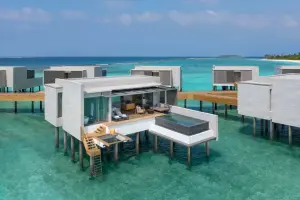
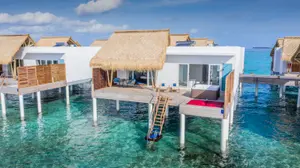
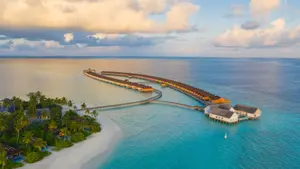
JOALI Maldives occupies its own private island here, reached by seaplane from Velana International Airport, 170 kilometres to the south. The flight threads over a chain of atolls, the aircraft banking low enough to see the shadows of manta rays gliding beneath the surface. Closer airports serve the northern atolls, but the seaplane route remains the signature arrival, skimming over reefs where the lagoon drops from pale jade to indigo in a matter of metres.
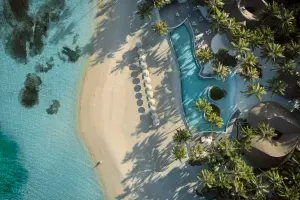
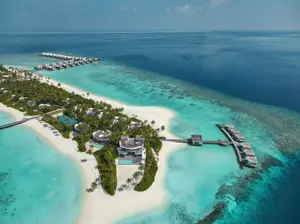
The island itself sits on a detached reef, ringed by white sand and dense foliage. Mornings here are soundtracked by the hiss of waves meeting the outer reef, afternoons by the creak of palm fronds and the occasional call of a reef heron. The air carries salt and frangipani in equal measure.
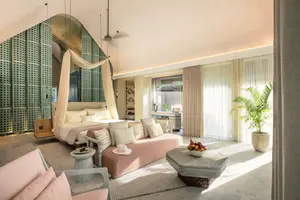
The property takes art seriously, with installations by international and Maldivian artists scattered across the island and integrated into villa interiors. Snorkelling the house reef reveals hawksbill turtles and blacktip reef sharks cruising the drop-off, while the dive centre runs expeditions to Hanifaru Bay during manta season (June through November) and to channels where grey reef sharks patrol the current. On-island dining spans multiple venues, from beachfront grills to a Japanese restaurant perched over the lagoon, though no Michelin-starred establishments operate within the atoll.
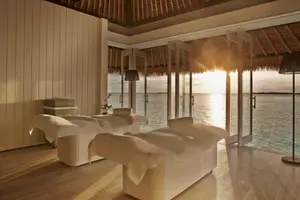
Book a sunset dolphin cruise into the deeper waters beyond the reef, where spinner dolphins breach in the golden hour light. The overwater spa draws on hammam traditions and Maldivian healing practices, with treatments incorporating coconut, sandalwood, and sea salt. For a sense of local rhythm, the resort arranges visits to Ungoofaaru, the atoll capital, where the fish market operates in the early morning and craftsmen still build dhonis (traditional wooden boats) by hand along the harbour.
The dry northeast monsoon runs from December through April, when skies are clearest and the lagoon turns glassy between rainfall. February and March are the driest months, with temperatures hovering around 28°C and enough breeze to temper the midday heat.
May ushers in the southwest monsoon, bringing heavier rain and choppier seas that last through October. The wettest stretch falls between May and November, though showers tend to arrive in short, violent bursts rather than day-long drizzle. Humidity climbs, but so does plankton density, drawing manta rays to nearby cleaning stations.
November marks the transition back to calmer conditions, with rain tapering off and visibility improving underwater. The best window for diving and uninterrupted sun falls between January and April, though serious divers may prefer the plankton-rich months when pelagic activity peaks.
Frequently Asked Questions
Free service · No obligation
Request a Quote