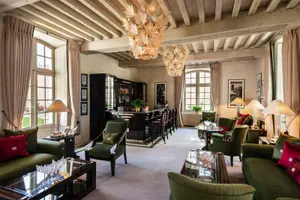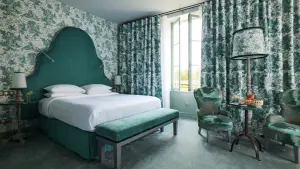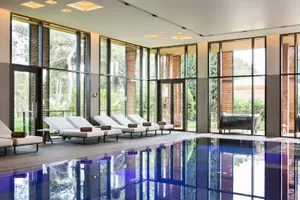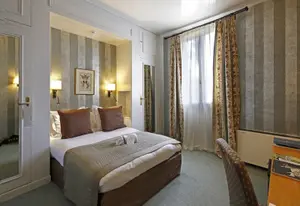
Chateau De Montcaud
When you book Chateau De Montcaud in Provence, France through our Tablet Plus partnership, your stay includes room upgrades and a hotel credit.
Exclusive Booking Perks
- Upgrade to next room category, based upon availability at check-in
- Complimentary cocktail per guest, per stay (max two guests)
- Welcome treat in room on arrival
- 20 EUR hotel credit per room, per stay (valid towards incidentals)
Location
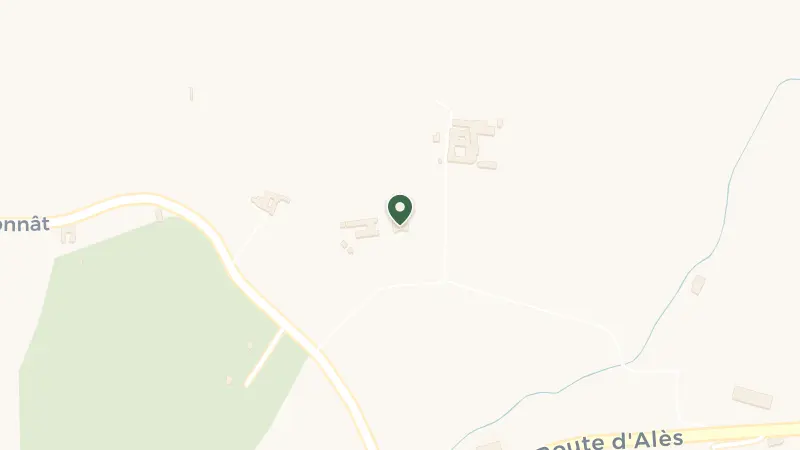
Chateau De Montcaud rises from a private estate in the Provençal countryside near Sabran, a quiet commune in the Gard where medieval hilltop villages still mark the horizon. The property sits in Combe, a sliver of southern France where vineyards and garrigue give way to parasol pines and olive groves. Stone farmhouses dot the rolling landscape, their shutters weathered by the mistral. The scent of lavender and wild thyme carries on dry air, and cicadas thrum in the midday heat.
Sabran itself clings to a ridge above the Cèze River, its ramparts and narrow lanes unchanged for centuries. Four kilometres north, the Sautadet Waterfalls cut through limestone in a series of white-water cascades, the river pooling in natural basins before rushing onward. Domaine La Romance, just under four kilometres away, and a constellation of small wineries within ten kilometres produce Côtes du Rhône Villages wines from grenache and syrah vines planted in chalky soil.
Avignon Caumont airport lies 40 kilometres east. Marseille Provence and Montpellier-Méditerranée serve long-haul connections at roughly 100 and 80 kilometres respectively. The property feels worlds removed from those hubs, accessible yet deeply rural.
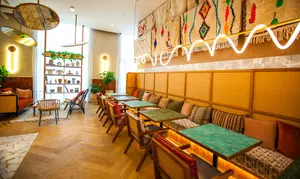
Le Cèdre de Montcaud holds one Michelin star under chef Matthieu Hervé, whose menu draws on international technique while leaning into the Provençal pantry. Book a table here for produce-driven modern cuisine: Hervé sources from nearby farms and markets, his dishes precise in presentation and generous in flavour. Bistro de Montcaud serves a more casual register, traditional southern French cooking with organic priorities. Expect poultry and foie gras pâté en croûte, tomato gazpacho with watermelon granita and shiso, and rockfish prepared three ways in the manner of bouillabaisse. Both restaurants sit on the estate, no distance to cover.
The Roman Theatre at Orange, 19 kilometres west, retains its original 103-metre facade, a monument to imperial-era entertainment built between 10 and 25 AD. The Pont du Gard, 25 kilometres south, arches over the Gardon River, a testament to Roman hydraulic engineering from the first century BC. Avignon's Palais des Papes, 31 kilometres east, was the seat of seven popes in the 14th century, its austere walls concealing frescoes by Simone Martini and Matteo Giovanetti. Marché hebdomadaire in nearby Bagnols-sur-Cèze brings farmers and cheesemakers every Wednesday morning.
July and August blaze at nearly 30 degrees, the air dry and the light white-gold by midday. Stone walls retain heat into the evening; terraces and shaded courtyards become the only sensible places to linger. The mistral can blow hard in summer, bringing relief but also rattling shutters and bending cypress trees.
Spring and autumn soften the edges. April through June and September through October see temperatures climb into the low twenties, the mornings cool enough for long walks through vineyards. May brings frequent rain, October even more, but the skies clear quickly and the landscape greens.
Winter is mild by northern European standards, daytime highs around eight to ten degrees, though nights dip near freezing. The countryside empties of tourists, the villages quiet except for local commerce. February can be damp, but the season has a stillness that suits the region's slow rhythms.
Frequently Asked Questions
Free service · No obligation
Request a Quote 11 Bib Gourmand