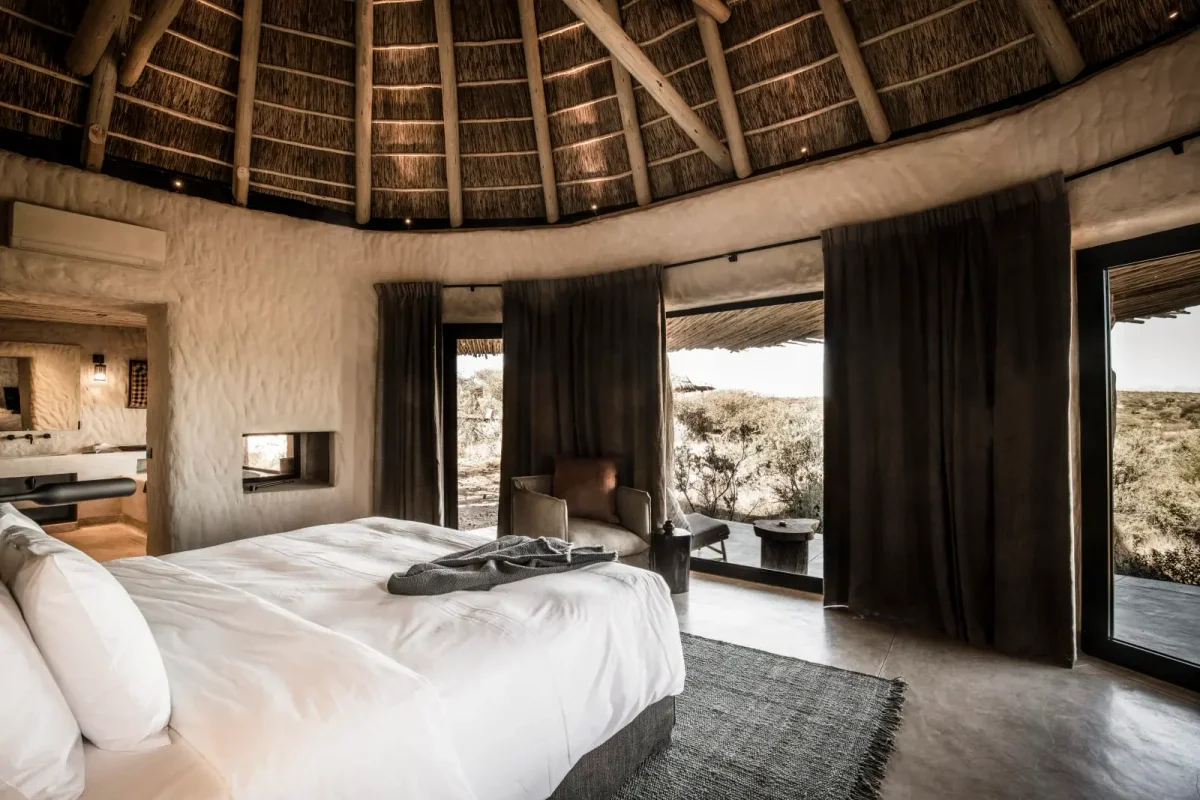
Zannier Omaanda
Windhoek Namibia Africa
When you book Zannier Omaanda in Windhoek, Namibia through our Fora Reserve partnership, your stay includes a complimentary spa treatment.
Special Offer
Honeymoon offer: couples can enjoy a 20% discount when staying a minimum of two nights, along with special honeymoon amenities: • A bottle of sparkling wine upon arrival • One 60-minute spa treatment per adult per stay
Exclusive Booking Perks
- Full Board
Location

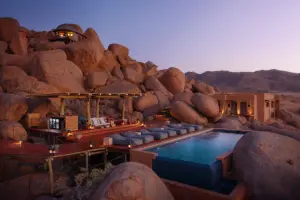
Zannier Hotels builds its properties around intimacy and environmental sensitivity, never exceeding 40 rooms, always sourcing materials from the surrounding landscape. Omaanda sits in Namibia's Khomas Highland plateau, a terrain of tawny grassland and scattered acacia where the air holds a high-altitude clarity and the light stretches long across the savanna. The property lies within the Nǀa'an ku sê Wildlife Sanctuary, seven and a half kilometres from Windhoek's centre, close enough to reach the capital's cultural institutions yet entirely removed from its urban rhythm.
Windhoek developed around a hot spring in 1840, grew under German colonial rule from 1890, and now serves as Namibia's political and cultural heart. St George's Cathedral anchors the city centre, its modest spire a landmark from the colonial era. The National Museum of Namibia and the National Earth Science Museum hold collections that trace the country's geological drama and human history, while the Trans-Namib Railroad Museum documents the iron lines that stitched this vast territory together.
Hosea Kutako International Airport lies nine kilometres from the property. Eros Airport, 36 kilometres away, handles domestic and charter flights.
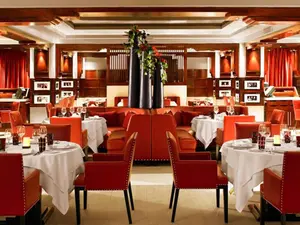
The sanctuary operates as a haven for rehabilitated wildlife, and game drives reveal oryx, springbok, giraffe, and kudu moving through thornveld and savanna. Walking safaris bring you close to the smaller dramas: ground squirrels, secretary birds, the prints of aardvark and jackal in the dust. The property's main lodge serves meals that draw on Namibian ingredients, including springbok loin, biltong, and potjiekos, the slow-cooked stew that traces its lineage to Afrikaner pastoral tradition. Book a sunset drive to watch the plateau flood with amber light as herds gather near waterholes.
Windhoek's museums lie within easy reach for those drawn to deeper historical context. The National Museum of Namibia, established in 1990, holds ethnographic collections from the Herero, Nama, and San peoples, while the National Earth Science Museum displays Namibian fossils and minerals, including specimens from the Namib Desert's ancient geology. Don't miss the Trans-Namib Railroad Museum for its archive of locomotives and maps that chart the country's colonial infrastructure.
Summer arrives between November and March, when afternoon thunderstorms sweep across the plateau and temperatures climb to 30°C. The rains turn the grassland briefly green, and wildlife disperses to scattered waterholes. Mornings hold a fragile coolness before the sun climbs.
Winter stretches from May through August, when daytime temperatures settle around 20 to 23°C and nights drop sharply to 6°C. The air dries out completely, the sky becomes unbroken blue, and animals concentrate near permanent water sources. June and July see almost no rain at all, and the light holds a crystalline precision ideal for photography.
The shoulder months of April and September offer the plateau's most temperate conditions: warm days, mild nights, and the first or last whispers of green depending on the season. October heats up quickly as the dry season peaks.
Frequently Asked Questions
Free service · No obligation
Request a Quote