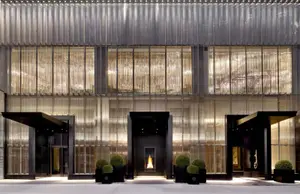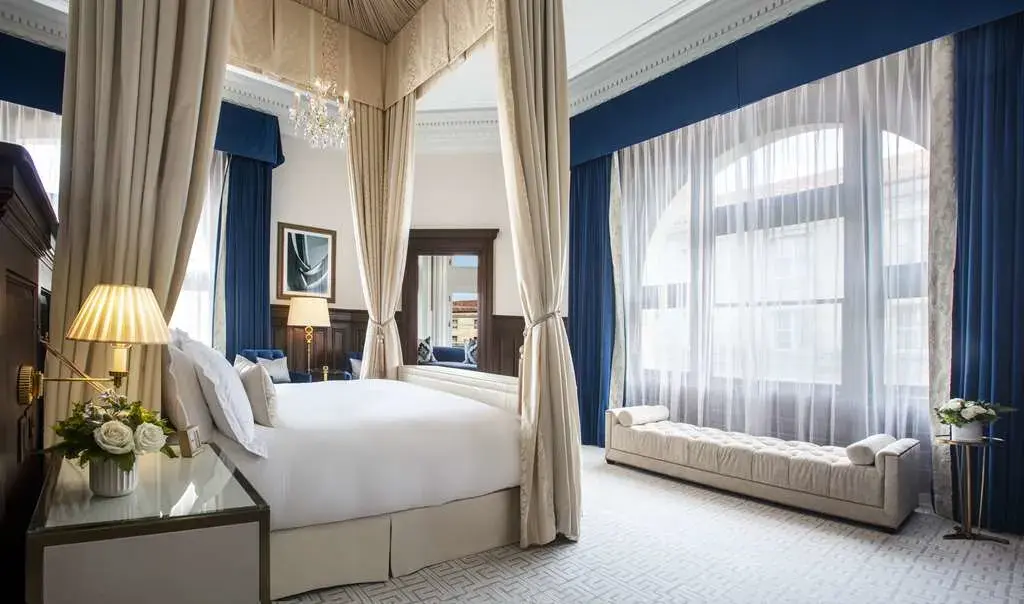
Waldorf Astoria Washington DC
Washington, D.C. USA North America
When you book Waldorf Astoria Washington DC in Washington, D.C., USA through our Virtuoso partnership, your stay includes daily breakfast, room upgrades and a $100 hotel credit.
Exclusive Booking Perks
- Upgrade on arrival, subject to availability
- Daily breakfast credit of $45 per person, for up to two guests per bedroom, served in the restaurant and via in-room dining (credit is non-cumulative)
- USD 100 equivalent Food & Beverage credit to be utilized during stay, applicable towards Peacock Alley and In-Room Dining (not combinable, not valid on room rate, no cash value if not redeemed in full)
- Early Check-In / Late Check-Out, subject to availability
Location
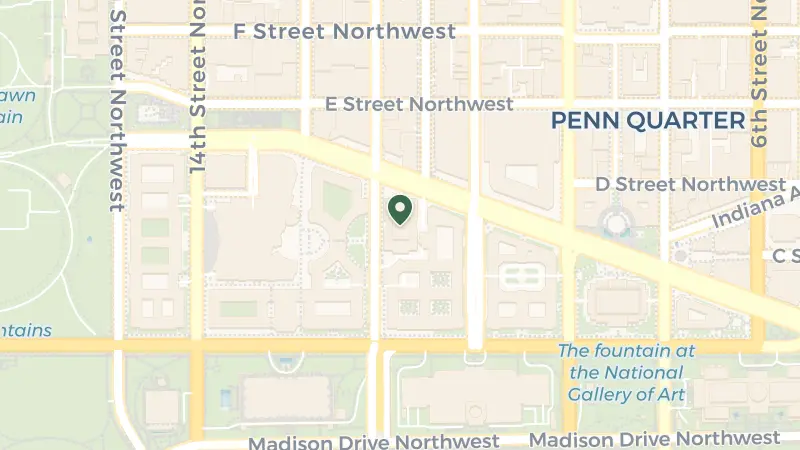
The Waldorf Astoria tradition of grand-scale hospitality and the True Waldorf Service programme finds its expression in the nation's capital, where the brand's signature attention to architectural heritage meets the rhythm of political and cultural power. Downtown Washington is a district of monuments and marble, where federal buildings stand shoulder to shoulder with Smithsonian institutions and the energy shifts from morning briefings to evening galas. This is the third largest central business district in the United States, a neighbourhood that pulses with purpose.
The property occupies a position between the National Mall's sweep of museums and the tree-lined avenues that radiate north toward Dupont Circle. Pennsylvania Avenue runs nearby, the ceremonial route that connects the Capitol to the White House. Franklin and McPherson Squares offer pockets of green within a kilometre, while the National Portrait Gallery and Ford's Theatre anchor the Penn Quarter's cultural corridor. The streets here carry the weight of history but move with contemporary urgency.
Ronald Reagan Washington National Airport sits five kilometres south across the Potomac, reachable via Metro or a quick taxi ride. Dulles International lies 37 kilometres west for intercontinental arrivals, while Baltimore/Washington International serves as a northern alternative 44 kilometres distant.
Sushi Nakazawa Washington DC brings Chef Daisuke Nakazawa's exacting omakase tradition to the property, where the marble counter and dark wood interiors frame 20 courses of Edomae-style nigiri. Book a seat at the counter to watch the itamae's knife work and the precise angling of each piece. Four hundred metres west, minibar by José Andrés operates as a culinary laboratory behind a single unmarked door, where two Michelin stars reflect the ambition of a 12-seat counter experience that begins with cocktails and progresses through courses that challenge the physics of flavour. Jônt, Ryan Ratino's two-starred counter 2.5 kilometres north, runs as a sharp-suited performance above Bresca, each course delivered in perfect tandem.
The National Mall stretches south, where the Smithsonian's collection spans from the National Gallery's Vermeers to the African American History Museum's cultural reckoning. Ford's Theatre still stages performances in the space where Lincoln was shot, while the National Archives holds the Constitution under argon and low light. The Downtown Holiday Market fills the winter months with craft stalls and mulled wine, and the Wednesday farmers' market at Dupont Circle brings regional produce and prepared foods to the neighbourhood two kilometres north.
Summer in Washington means heat that settles heavy over the monuments, with July pushing past 30 degrees and humidity thick enough to slow the pace on the Mall. The city empties of lawmakers in August, leaving the museums and memorials to visitors who move between air-conditioned galleries. Thunderstorms roll through on late afternoons, clearing the air for an hour before the humidity returns.
Spring and autumn offer the best conditions for walking the city, when temperatures hover in the high teens to low twenties and the light slants gold across the Tidal Basin's cherry blossoms in late March or the rust-coloured foliage of Rock Creek Park in October. These shoulder seasons bring smaller crowds and clearer skies.
Winter sees temperatures dip below freezing most nights, with occasional snow that transforms the neoclassical facades into something from a different century. The city's cultural calendar runs uninterrupted, and the chill keeps the museum galleries mercifully uncrowded.
Frequently Asked Questions
Free service · No obligation
Request a Quote 28 Bib Gourmand