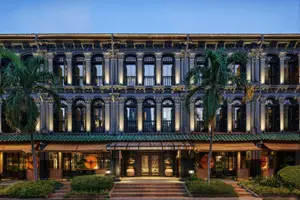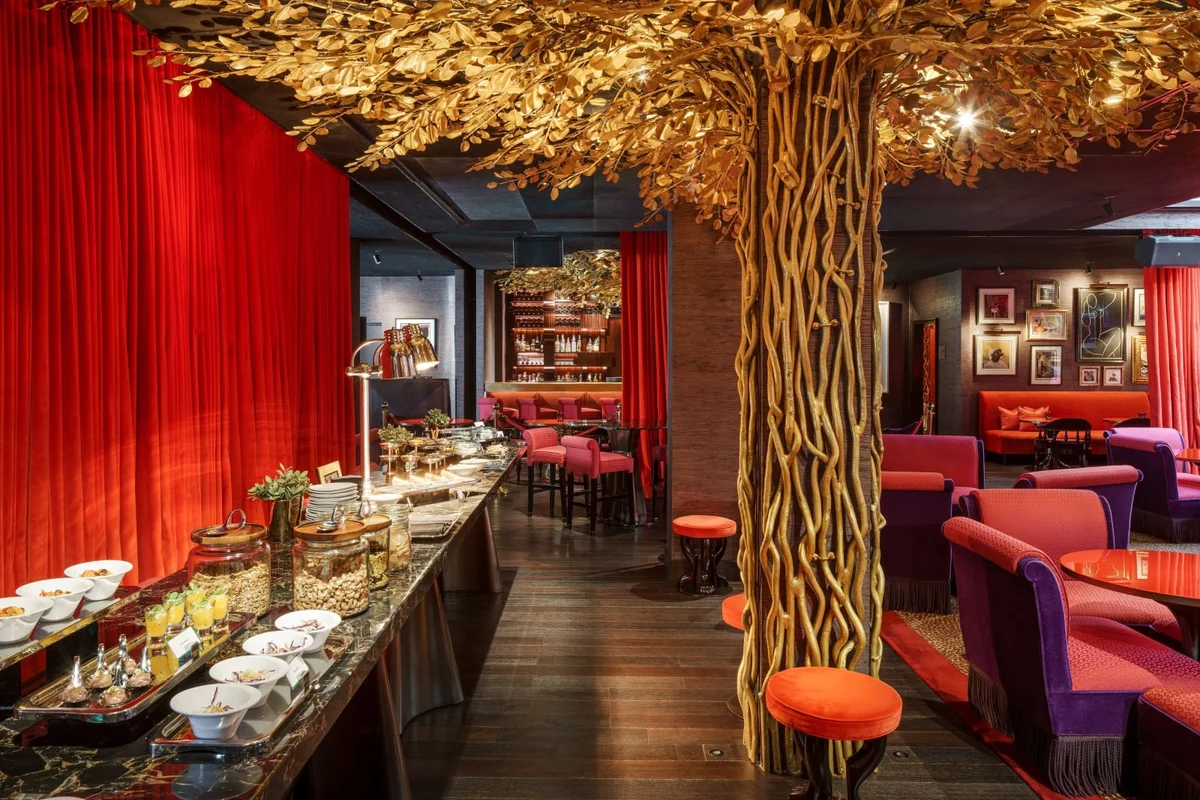
The Vagabond Club, Singapore, a Tribute Portfolio Hotel
When you book The Vagabond Club, Singapore, a Tribute Portfolio Hotel in Singapore through our Marriott Luminous partnership, your stay includes daily breakfast, room upgrades and flexible check-in and check-out.
Exclusive Booking Perks
- Welcome amenity
- Complimentary breakfast daily for two guests per room
- Early check-in and late check-out (when available)
- Complimentary upgrade (if available at check-in)
Location
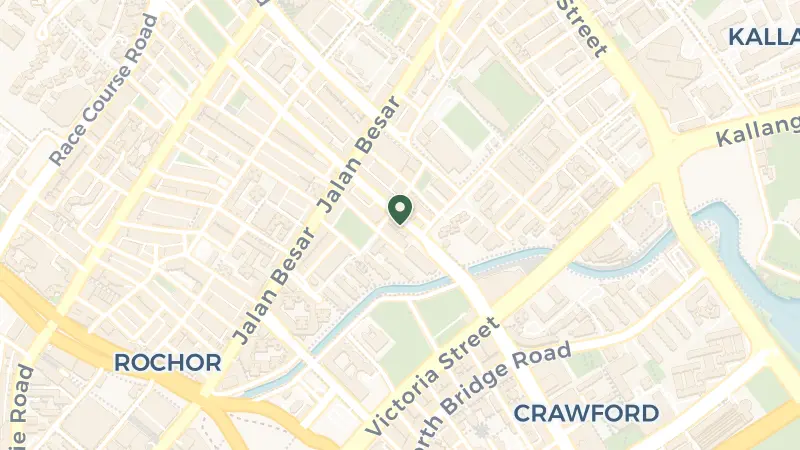
The Vagabond Club exists for travelers who value personality over predictability. A Tribute Portfolio Hotel, the property brings the eclectic spirit of its brand philosophy to Singapore's Kallang district, a neighbourhood shaped by the city-state's longest river and a legacy of reinvention. This is not colonial Singapore or the glass-tower financial district. Kallang pulses with local rhythms: hawker centres in full swing by dawn, shophouses painted in faded pastels, the hum of everyday commerce spilling onto five-foot ways.
Singapore itself is a vertical city built on relentless ambition, its contemporary skyline rising from a trading post Stamford Raffles established in 1819. By 1965, the island had become an independent republic, and in the decades since, it has woven British colonial bones, Malay tradition, Chinese entrepreneurial energy, and Indian cultural depth into something entirely its own. The result is a city where Tamil prayers drift from Sri Veeramakaliamman Temple while Peranakan tiles gleam in Katong shophouses, where you can eat Hainanese chicken rice at a UNESCO-recognized hawker stall and dine at three-Michelin-starred temples of haute cuisine within the same afternoon.
Changi Airport lies sixteen kilometres east, connected by expressway and the efficient MRT network. Lavender MRT station places much of the island within easy reach, though the real pleasure of Kallang is in wandering streets where the city's workaday character reveals itself without fanfare.
Tekka Wet Market, less than a kilometre away, opens before sunrise. Stalls overflow with glistening ikan merah, bundles of kangkong, and the sharp scent of galangal and lemongrass. The adjacent hawker centre serves some of the city's most honest food: order murtabak stuffed with spiced mutton, or a bowl of fish head curry that pools turmeric-gold around chunks of snapper. For Michelin-recognized cooking, travel two kilometres south to Odette in The National Gallery, where Julien Royer's three-starred French Contemporary cuisine elevates luxury ingredients with surgical precision. Les Amis, nearly three kilometres away, offers haute cuisine with the freedom to choose your own path through a singularly sophisticated experience. Closer still, neighbourhood hawker centres like Pek Kio Market repay exploration with char kway teow wok-fried to smoky perfection.
Book a table at Zén, housed in a shophouse three and a half kilometres distant, for Björn FrantZén's neo-Nordic tasting menu inflected with Japanese technique and a strong pull toward seafood. The Singapore Botanic Gardens, five kilometres northwest and inscribed as a UNESCO World Heritage site in 2015, traces the evolution of a British colonial garden into a modern scientific institution. Walk the orchid-shaded paths, then venture to Sentosa's beaches, seven kilometres south, where the city's business-suited intensity gives way to sand and calm water.
Singapore sits one degree north of the equator, and the heat never truly relents. Temperatures hover in the high twenties year-round, the air thick with humidity that clings to skin the moment you step outside. Afternoon thunderstorms arrive with little warning, dumping rain in sudden bursts before the sun returns, steam rising from wet pavements.
The so-called monsoon months, November through January, bring the heaviest downpours, though showers are possible any time of year. February through April offer slightly drier conditions, mornings when the sky stays clear long enough to walk without an umbrella close at hand. May and June feel marginally less oppressive before the cycle begins again.
There is no wrong season to visit, only degrees of wetness. The city's indoor culture, its covered hawker centres and air-conditioned galleries, exists precisely because the climate demands adaptation. Come prepared for heat, carry an umbrella, and surrender to the rhythm of seeking shade when the sun climbs highest.
Frequently Asked Questions
Free service · No obligation
Request a Quote 89 Bib Gourmand