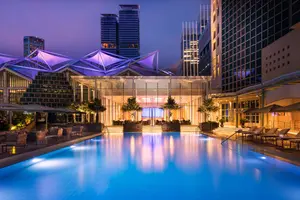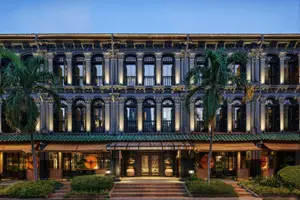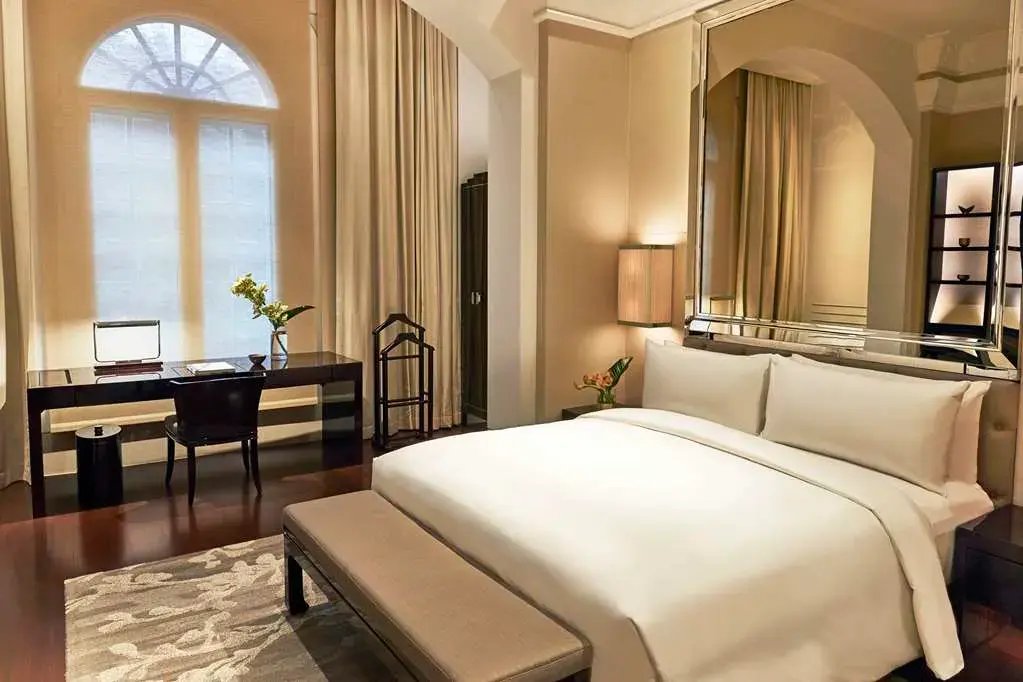
The Capitol Kempinski Hotel Singapore
When you book The Capitol Kempinski Hotel Singapore in Singapore through our Fora Reserve partnership, your stay includes daily breakfast, room upgrades and a $100 hotel credit.
Exclusive Booking Perks
- Upgrade at time of booking up to Stamford Suite, subject to availability
- Daily bubbly buffet breakfast for up to two guests per room/suite, served in the 15 Stamford Restaurant
- $100 USD equivalent Food & Beverage credit to be utilized in the hotel-managed restaurants and bars during stay (not combinable, no cash value if not redeemed in full)
- A 10% discount on Food & Beverage services
- Evening aperitifs and light snack, served daily at the Executive Lounge from 18:00 until 20:00
- Early Check-In / Late Check-Out, subject to availability
Location
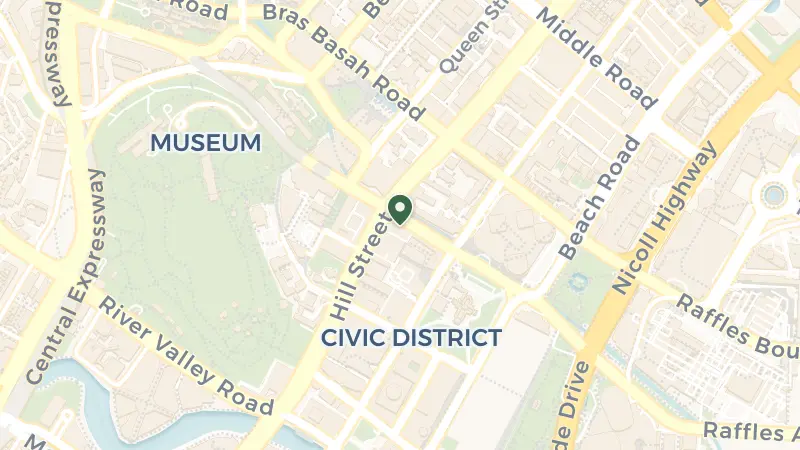
The Civic District sits at the confluence of Singapore's colonial past and contemporary ambition, where neoclassical colonnades face mirrored towers and hawker smoke drifts past heritage facades. This is the ceremonial heart of the city-state, a precinct anchored by institutions that trace their lineage to Stamford Raffles' 1819 vision of Singapore as a maritime crossroads. The Former Supreme Court Building and Former City Hall bookend Padang, the cricket green where colonial officers once strolled, while the Civilian War Memorial's four pillars rise nearby, marking the island's more recent scars.
Fort Canning crowns a low hill behind the property, its colonial-era bunkers and spice gardens threading through banyan canopies. The National Gallery Singapore occupies two of the district's most commanding structures, their Corinthian porticos now framing one of Southeast Asia's largest public collections of modern art. Parliament House sits along the Singapore River, its modernist geometry a counterpoint to the riverside shophouses and quay-side warehouses that once serviced the port trade. City Hall MRT connects the neighbourhood to the rest of the island's network, while Esplanade's twin durian-shell domes glow on the bay side after dusk.
Singapore Changi Airport lies seventeen kilometres east, linked by expressway or MRT in under thirty minutes. The district itself unfolds on foot: museums, monuments, and the river walk converge within a ten-minute radius.
On-site, Sushi Sakuta holds two Michelin stars, its ten-seat counter hewn from a 200-year-old cypress sourced from Nara. The omakase progression leans traditional Edomae, each piece calibrated to the grain of the wood and the hush of the room. Half a kilometre south, Odette commands three stars within the National Gallery, where Chef Julien Royer sources luxury ingredients with forensic precision and plates them with modernist restraint. The tasting menu shifts with the seasons, but the execution remains unerring. Book a table well in advance. Two kilometres northwest in a Duxton Hill shophouse, Zén unfolds its neo-Nordic repertoire over eight courses, the seafood-centric menu inflected with Japanese technique and the minimalist clarity of Chef Bjorn FrantZén's Stockholm flagship.
The Asian Civilisations Museum occupies Empress Place, its galleries tracking trade routes from China to the Islamic world through celadons, textiles, and ritual bronzes. Tekka Wet Market, 1.4 kilometres north in Little India, roars with fishmongers and spice vendors at dawn; arrive early for saffron-hued sambar and crisp vadai at the adjoining food centre. The Singapore Botanic Gardens, inscribed as a UNESCO World Heritage site five kilometres northwest, shelters heritage orchids and a tangle of rainforest canopy that predates the city by centuries.
Singapore sits one degree north of the equator, which means the calendar holds little drama. Temperatures hover near 29°C year-round, with high humidity that softens into evening downpours, especially October through December when the northeast monsoon settles in. The air hangs heavy with the scent of frangipani and wet laterite after these storms, sidewalks gleaming under streetlamps.
January through March edges slightly drier, the city glittering during Chinese New Year when shophouses along the river drape in lanterns and the streets fill with lion dance processions. April sees its own deluge, the heat peaking just before the rains. May through August offers the closest approximation of a dry season, though afternoon thunderstorms still roll in most weeks, sudden and torrential, then gone.
The best time to visit aligns less with weather than with your tolerance for crowds. Come in the shoulder months of May or September if you prefer quieter galleries and shorter queues at hawker centres, when the city breathes easier between festivals.
Frequently Asked Questions
Free service · No obligation
Request a Quote 89 Bib Gourmand