Singita - Singita Kruger National Park
Kruger National Park South Africa Africa
When you book Singita - Singita Kruger National Park in Kruger National Park, South Africa through our Virtuoso partnership, your stay includes daily breakfast, room upgrades and a hotel credit.
Exclusive Booking Perks
- Upgrades not applicable for this property
- Daily Breakfast for up to two guests per bedroom, served in the restaurant and via in-room dining (already included in property rates)
- A Virtuoso gift to the value of $100 USD equivalent per adult couple (Children will be gifted an appropriate gift/activity set)
- Early Check-In / Late Check-Out, subject to availability
Location
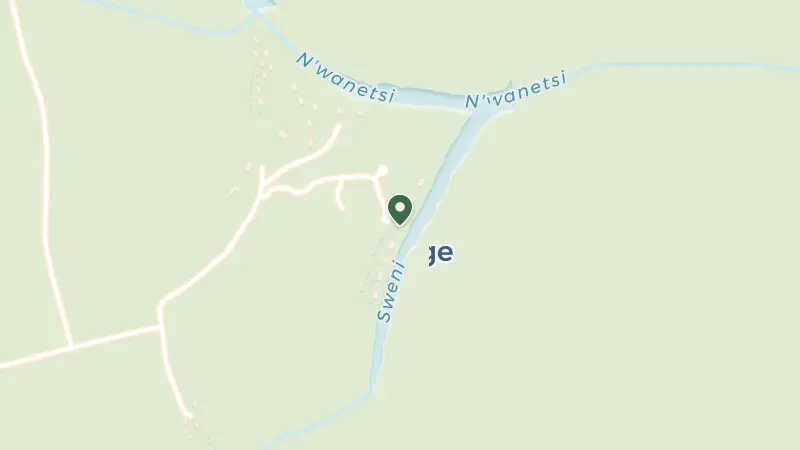
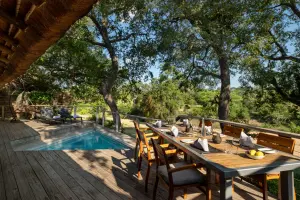
Singita's philosophy centers on preserving Africa's wild places through conservation-linked luxury, and nowhere is this more evident than at its two lodges within private concessions on the western boundary of Kruger National Park. The property occupies 15,000 hectares of exclusive traversing rights inside one of Africa's oldest and most storied reserves, a 19,600-square-kilometre expanse that President Paul Kruger first moved to protect in 1898. Here, the Lowveld bushveld stretches in waves of marula and knob-thorn, punctuated by granite outcrops and seasonal riverbeds that draw leopard, wild dog, and the densest elephant population on the continent.
The concession sits in the park's southwest corner, adjacent to Bushbuckridge Ward 34, where the official gates and crowds of the public sections feel worlds away. Game drives unfold in near-solitude, the only sounds the alarm call of a francolin or the crack of a branch under elephant feet. The landscape here is characteristically Lowveld: mopane woodland, riverine forest, and open savannah where lion prides move at dawn and dusk.
Skukuza Airport lies 69 kilometres east, a short charter flight that deposits guests directly into the heart of the reserve. Hoedspruit, 94 kilometres northwest, offers an alternative with connecting flights from Johannesburg. Both routes compress the journey, allowing more time on the land itself.
Morning and afternoon game drives cover vast stretches of the concession, where rangers track rhino in thickets of buffalo thorn and pause at waterholes as kudu and impala gather in the midday heat. Walking safaris bring the finer details into focus: the imprint of a pangolin's tail in sand, the medicinal properties of shepherd's tree bark, the rustle of a python moving through leaf litter. The property's position in a private concession means extended drives beyond Kruger's official gate hours, offering the possibility of nocturnal sightings, lions hunting under spotlight, or the guttural bark of a hyena clan at a kill site.
Beyond the immediate traversing area, the broader Kruger ecosystem stretches in all directions. The Karingani Game Reserve, a private reserve 22 kilometres south across the border in Mozambique, forms part of the Greater Limpopo Transfrontier Park, a conservation corridor linking Kruger with Limpopo National Park and Gonarezhou. Book a bush dinner under the stars after a sundowner drive, the table set in the open veld with the Southern Cross overhead and the distant rumble of elephants moving through the darkness.
Summer, from November through March, brings afternoon thunderstorms that green the bush and fill the riverbeds. Temperatures rise into the high twenties, humidity thickens the air, and migratory birds arrive in flashes of colour. The landscape transforms: wildflowers bloom, impala calves totter beside their mothers, and predators grow fat on easy prey. Midday heat sends most creatures to the shade, but dawn and dusk vibrate with activity.
Winter, May to August, offers the clearest game viewing. Daytime temperatures hover in the mid-twenties, nights drop to ten degrees or cooler, and the vegetation thins as the dry season takes hold. Animals congregate at shrinking water sources, making sightings more predictable. The air is crisp, the light sharp, and the absence of foliage means nothing stays hidden for long.
The shoulder months of April and September strike a balance: mild temperatures, fewer visitors, and the tail end of calving season or the first green flush of spring rains.
Frequently Asked Questions
Free service · No obligation
Request a Quote