Rosewood Inn of the Anasazi
When you book Rosewood Inn of the Anasazi in Santa Fe, USA through our Rosewood Elite partnership, your stay includes daily breakfast, room upgrades and a $125 hotel credit.
Exclusive Booking Perks
- Complimentary one-category upgrade upon arrival, based on availability
- Breakfast daily served in the restaurant (USD60 breakfast credit per day, per bedroom / USD30 per person per day, not inclusive of applicable taxes and gratuities.)
- USD125 Food & Beverage credit to be utilized during stay (not applicable towards tax and/or gratuities, not combinable, no cash value if not redeemed in full)
- Welcome amenity
Location
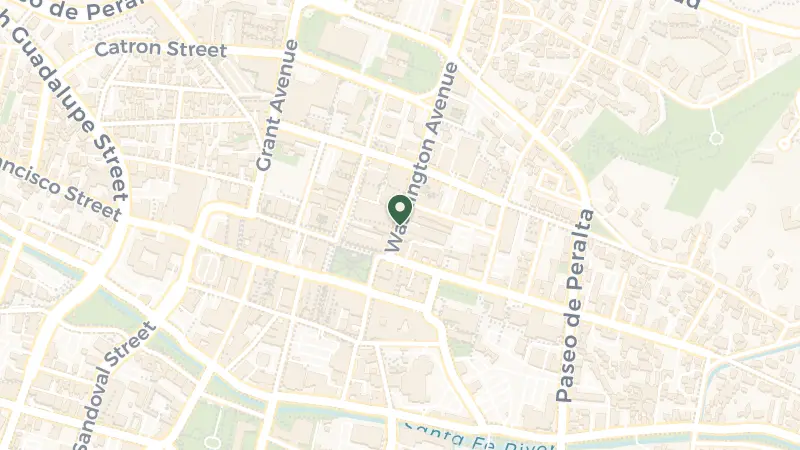
Rosewood operates properties that function as cultural landmarks, drawing on local heritage for architecture, art, and culinary direction. The brand's "A Sense of Place" philosophy finds fertile ground in Santa Fe, where centuries of indigenous, Spanish colonial, and Anglo cultures have layered atop one another to create something entirely distinct. The property sits in the Barrio de Analco Historic District, one of the oldest continuously inhabited neighbourhoods in North America, where earthen walls and vigas still line narrow streets much as they did three centuries ago.
Step outside and you're within the oldest working-class quarter of the city, centred at the junction of East De Vargas Street and Old Santa Fe Trail. The San Miguel Mission, built in 1710, stands a few minutes' walk away, its thick adobe walls bearing witness to Spanish colonial ambition. Next door, the so-called Oldest House, a simple structure from 1620, now operates as a museum. The district earned National Historic Landmark status in 1968, recognition of a rare architectural continuum stretching back four hundred years.
The high desert light here is famously sharp, gilding low-slung adobe facades in amber and rose. Santa Fe sits at over two thousand metres elevation, where the air thins and the sky deepens to cobalt. Santa Fe Municipal Airport is sixteen kilometres from the city centre; Albuquerque International Sunport, the larger gateway, lies ninety-four kilometres south with direct road access via Interstate 25.
The property's dining programme reflects the brand's commitment to local culinary heritage, though Santa Fe's gastronomic landscape extends well beyond hotel walls. The city's food culture is built on indigenous Pueblo traditions layered with Spanish and Mexican influences: expect dishes built around heirloom blue corn, Hatch chiles, posole stews, and squash blossom preparations. The Santa Fe Farmers Market, just over a kilometre north, operates year-round and draws producers from across northern New Mexico, offering everything from dried piñon nuts to heritage beans grown on century-old land grants. Book a table at one of the city's several indigenous-run dining rooms to taste what contemporary Pueblo cooking looks like when grounded in ancestral techniques.
Cultural exploration begins with the immediate neighbourhood. The Barrio de Analco's colonial-era structures tell the story of Tlaxcalan labourers who built the Spanish missions, their descendants forming the core of this working-class enclave. Ninety-one kilometres north, Taos Pueblo, a UNESCO World Heritage Site inscribed in 1992, preserves multi-storey adobe dwellings that have been continuously inhabited for over a millennium. Closer to the property, the Santa Fe Canyon Preserve (four kilometres) and Randall Davey Audubon Center (under five kilometres) offer high-desert hiking through piñon-juniper woodlands where the Rio Grande watershed begins its descent. Winter brings skiing at Ski Santa Fe, seventeen kilometres into the Sangre de Cristo Mountains, where runs cut through ponderosa forest at over three thousand metres elevation.
Winter transforms Santa Fe into a high-desert sanctuary of crystalline air and bone-dry cold. January and February see daytime temperatures hover around six degrees, though nights plunge well below freezing. Snow dusts the adobe walls and Sangre de Cristo peaks loom white against cerulean skies. The light is at its most dramatic, raking low across the plateaus.
Spring arrives slowly, warmth building through April and May as temperatures climb into the high teens and low twenties. Cottonwoods leaf out along arroyos, and the high country sheds its snowpack. This is prime hiking season before summer heat settles in. Late July and August bring monsoon rains, brief afternoon thunderstorms that drench the desert and fill the air with the scent of wet sagebrush.
Autumn is the finest season to visit. September and October deliver warm days in the low to mid-twenties, cool nights, and the aspens turning gold in the mountain canyons. The galleries and markets hum with energy, and the light softens to the honeyed glow that drew Georgia O'Keeffe and generations of painters to northern New Mexico.
Frequently Asked Questions
Free service · No obligation
Request a Quote