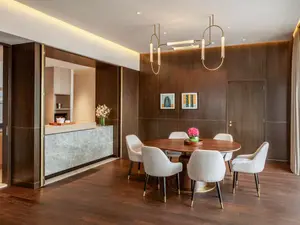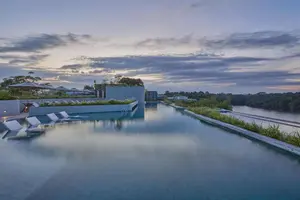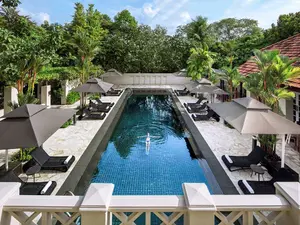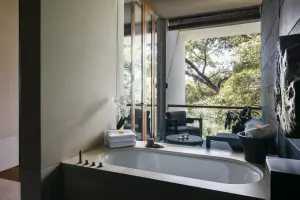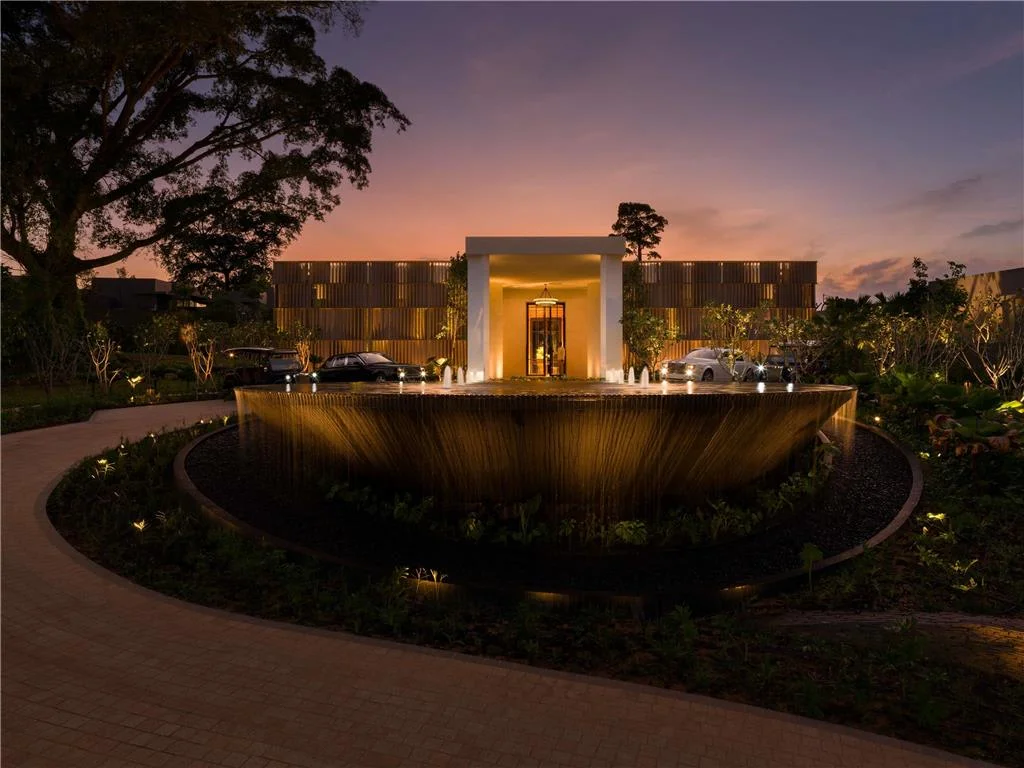
Raffles Sentosa Singapore
When you book Raffles Sentosa Singapore in Singapore through our Accor - HERA partnership, your stay includes daily breakfast, room upgrades and a $100 hotel credit.
Exclusive Booking Perks
- Daily complimentary breakfast for 2, per room
- VIP Welcome
- $100 USD credit to be spent on property (conditions defined at check-in)
- Early check-in & late check-out (upon availability)
- Upgrade at time of check-in (upon availability)
Location
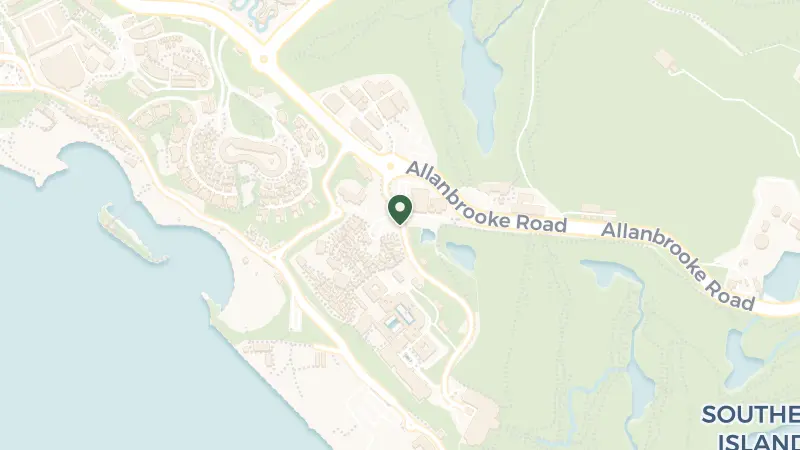
Raffles arrived on Sentosa in 2020, bringing its tradition of colonial-era grandeur and butler service to an island resort context, a departure from the brand's usual heritage townhouse settings. The property sits on the southern coast of this offshore leisure island, once home to Malay fishing communities and Orang Laut sea nomads before its transformation into Singapore's primary beach resort enclave. Sentosa itself spans just over five square kilometres off the southern tip of the main island, linked by causeway and cable car, a landscape of pale sand beaches, manicured golf courses, and jungle-covered ridges that rise abruptly from the seafront.
The immediate surroundings balance tropical languor with manufactured leisure: Tanjong Beach stretches 400 metres west, a strip of imported sand where the South China Sea laps quietly against the shore, while The Serapong golf course rolls across the island's interior less than a kilometre away. The island's position in the Singapore Strait places it within sight of container ships heading for the world's busiest transshipment port, a reminder that this resort sanctuary sits in the heart of a working maritime city. The mainland's skyscrapers shimmer across the water, close enough to reach in minutes but distant enough to feel removed.
Singapore Changi Airport lies 22 kilometres northeast, a half-hour drive via the East Coast Parkway and Sentosa Gateway. The city's MRT system connects to VivoCity on the mainland, where the Sentosa Express monorail completes the final crossing.
Sentosa's beaches progress westward from Tanjong's relative calm to Palawan's family-oriented stretch half a kilometre beyond, then Siloso's volleyball nets and water sports nearly two kilometres out. Imbiah Falls, a constructed cascade in the island's forested interior, anchors a zone of themed attractions best appreciated as curious relics of 1990s resort planning. The property's location favours those who prefer a morning swim followed by a quick crossing to the mainland's serious dining: Zén commands attention four kilometres north in Bukit Pasoh, where chef Björn FrantZén's eight-course neo-Nordic menu unfolds across two floors of a shophouse, seafood-forward with Japanese inflections earning three Michelin stars. Book a table at Odette in the National Gallery, five kilometres northwest, where Julien Royer's French contemporary cooking justifies its own trio of stars.
On the mainland, Telok Blangah Market and Tanjong Pagar Market sit within four kilometres, both hawker centres where laksa and char kway teow appear at communal tables under fluorescent light. The Singapore Botanic Gardens, a UNESCO World Heritage Site eight kilometres north, preserves 160 years of tropical plant research in 82 hectares of rainforest and formal plantings, the National Orchid Garden holding over 1,000 species in a Victorian-era glasshouse setting.
Singapore's equatorial position one degree north of the line delivers uniformity: high temperatures hover near 29°C year-round, lows rarely dip below 25°C, and the concept of seasons reduces to gradations of rainfall rather than temperature shifts. The air stays heavy with moisture regardless of month, ceiling fans a necessity even in air-conditioned rooms when you step onto a balcony.
November through January marks the northeast monsoon, when thunderstorms roll in most afternoons and the city takes on a pewter light, rain hammering the pavements in short, violent bursts before clearing to steam. February through April sees slightly drier conditions, though "dry" in Singapore still means occasional downpours and air that clings to skin. May through October brings the southwest monsoon, marginally less rain but equally thick humidity.
No month offers escape from the heat, but February and July see fractionally lower precipitation. The city's rhythm remains constant: mornings start muggy, afternoons build to storms, evenings cool imperceptibly. Plan indoor museum visits for midday, reserve beach time for early morning or late afternoon when the sun loses some of its equatorial intensity.
Frequently Asked Questions
Free service · No obligation
Request a Quote 89 Bib Gourmand