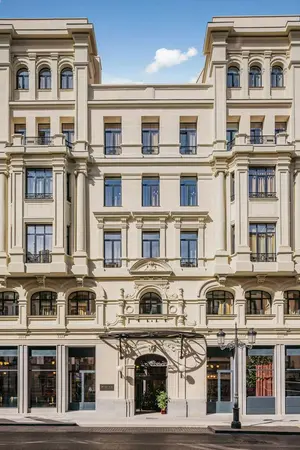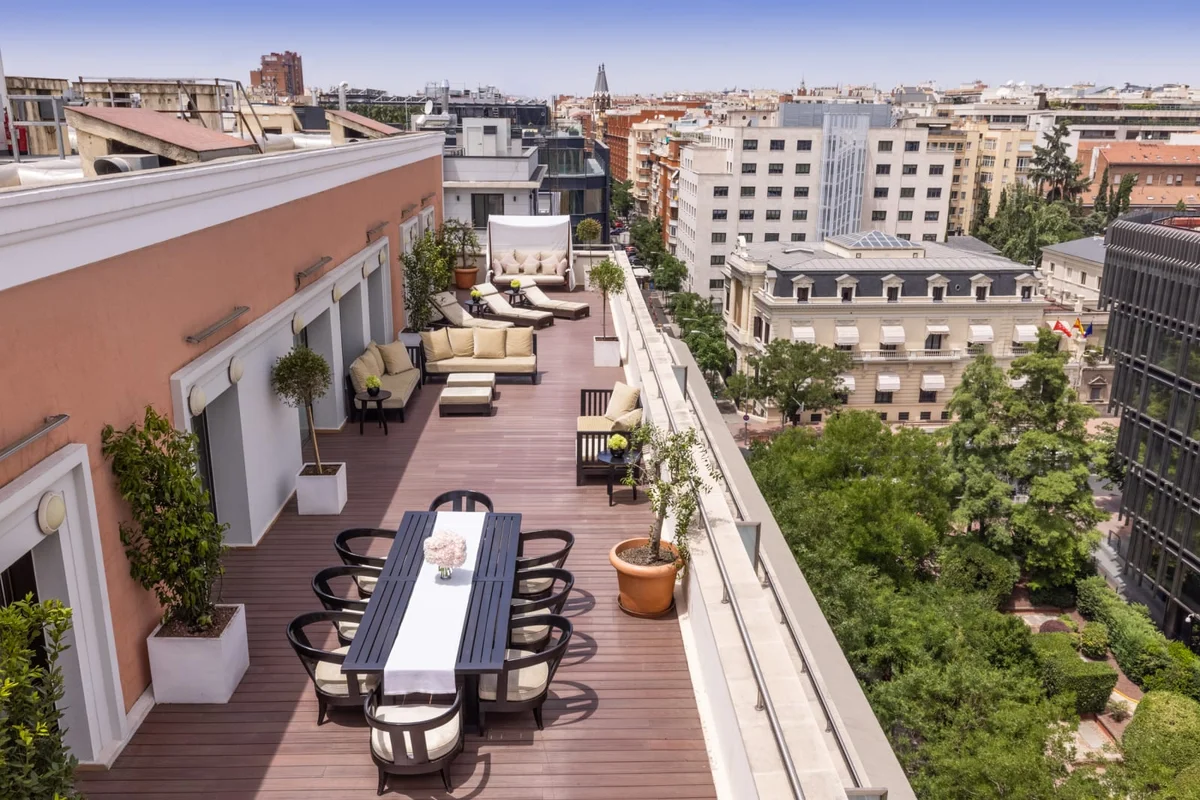
InterContinental Madrid by IHG
When you book InterContinental Madrid by IHG in Madrid, Spain through our Virtuoso partnership, your stay includes daily breakfast, room upgrades and a $100 hotel credit. Plus, for a limited time, a complimentary night is included with your stay.
Special Offer: Free night
Complimentary night Receive a complimentary night* on 3, 4, 5, or 7 consecutive night stays at participating hotels. Blackout dates may apply.
Exclusive Booking Perks
- Upgrade on arrival, subject to availability (Upgrade excludes Ambassador, Presidential or Royal Suites)
- Daily Buffet breakfast for up to two guests per bedroom, served in the restaurant
- Bookings in Premium rooms will receive Complimentary InterContinental Club Lounge Access
- Bookings in Premium Room with Club Lounge Access and Junior Suites (which already include Club Lounge Access) will receive $100 USD Hotel Credit to be utilized during stay, applicable towards Room Service, Minibar, and Laundry services (not combinable, not valid on room rate, no cash value if not redeemed in full)
- Bookings in Ambassador Suite, Presidential Suites and Royal Suite (which already include Club Lounge Access) will receive both $100 USD Food & Beverage credit to be utilized during stay, applicable towards Restaurant, Bar, Room Service or Minibar (not combinable, not valid on room rate, no cash value if not redeemed in full) and complimentary one-way private airport transfer
- Stays of 3+ nights in any accommodation will additionally receive Complimentary Prado Museum Tickets for up to two guests per stay.
- Early Check-In / Late Check-Out, subject to availability
Location
InterContinental operates as a gateway brand, designed to connect its guests with the cultural currents of wherever they land. Through its Insider Experiences programme and a service style calibrated for both scale and intimacy, the brand positions its properties as thoughtful starting points for exploration rather than insular retreats. This approach suits Madrid particularly well: a city that rewards engagement over detachment.
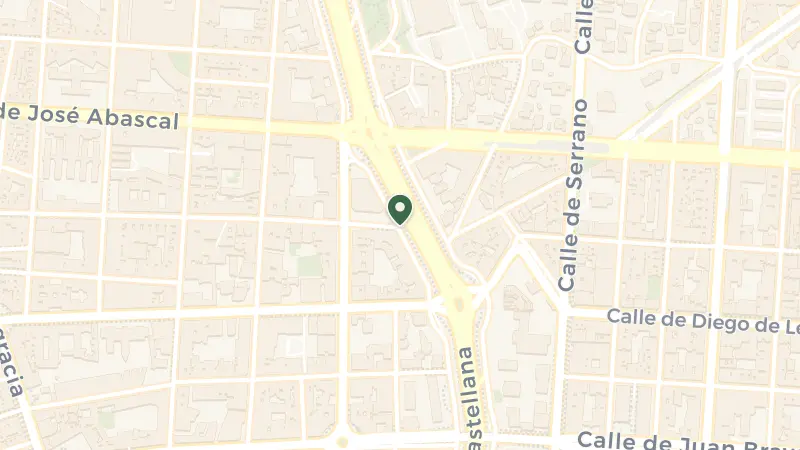
The property sits in Almagro, a residential neighbourhood within the wider Chamberí district, itself a product of Carlos María de Castro's mid-19th-century Ensanche expansion. The grid here is calmer than the tangle of medieval alleys further south, lined with balconied buildings, corner cafés, and the kind of grocers where locals queue for jamón. Chamberí retains an unshowy Madrilenian character, intimate markets like Mercado de Torrijos (one and a half kilometres north) serving as anchors for daily life. The district developed as an administrative and residential quarter after Madrid became the permanent seat of the Hispanic Monarchy in 1561, a role that shaped its orderly, bourgeois texture.
Walk south and you reach Paseo del Prado, the tree-lined avenue conceived in the 16th century as a prototype of the Hispanic alameda and now part of a UNESCO-listed cultural landscape alongside the Buen Retiro gardens. Adolfo Suárez Madrid–Barajas Airport lies twelve kilometres northeast, connected by metro and taxi.
Chamberí's culinary pull extends well beyond its neighbourhood borders. Within a ten-minute walk, Smoked Room (two Michelin stars) constructs its entire menu around the interplay of smoke and flame, each dish calibrated to suggestion rather than dominance. Just seven hundred metres away, Coque (also two stars) unfolds under the direction of the Sandoval brothers: Mario orchestrating the kitchen, Diego leading the dining room, Rafael curating the wine. Two and a half kilometres north, DiverXO holds three stars for Dabiz Muñoz's irreverent, hedonistic cooking, where dishes like "drunken crabs partying in Jerez" and the Minutejo del Agus mini pork sandwich riff on childhood nostalgia and global technique in equal measure. Book well ahead for any of them.
Beyond the table, the Prado and Reina Sofía anchor Madrid's Golden Triangle of art museums, both within two kilometres. The city's relationship with its past surfaces everywhere: the ninth-century walled core under the Emirate of Córdoba, the Habsburg grandeur of the Plaza Mayor, the Bourbon elegance of the Royal Palace. Mercado de San Antón, less than two kilometres east, layers a rooftop terrace above stalls selling octopus, quince paste, and Manchego aged in olive oil. For a longer excursion, Alcalá de Henares (twenty-eight kilometres) preserves the world's first planned university city, a 16th-century model of the Civitas Dei conceived by Cardinal Jiménez de Cisneros.
Summer in Madrid is uncompromising: July and August see temperatures climb past thirty degrees, the city emptying as locals decamp to the coast or mountains. The light turns white and fierce, café awnings providing the only respite. Evenings stretch late, the terraces filling after ten.
Spring and autumn offer the most rewarding conditions. April through June and September through October deliver warm days, cool nights, and the kind of golden afternoon light that makes the Retiro gardens irresistible. October rains can be persistent, but the crowds thin and the city reclaims a working rhythm.
Winter is sharp and dry, temperatures dipping near freezing overnight but climbing to ten degrees by midday. December through February see the fewest visitors, the museums quieter, the bocadillos de calamares steaming at corner bars. The Guadarrama peaks, visible from rooftops, occasionally dust with snow.
Frequently Asked Questions
Free service · No obligation
Request a Quote 19 Bib Gourmand