Fairmont Winnipeg
Winnipeg Canada North America
When you book Fairmont Winnipeg in Winnipeg, Canada through our Accor Hera partnership, your stay includes daily breakfast, room upgrades and a $100 hotel credit.
Exclusive Booking Perks
- Daily complimentary breakfast for 2, per room
- VIP Welcome
- USD 100 credit to be spent on property (conditions defined at check-in)
- Early check-in & late check-out (upon availability)
- Upgrade at time of check-in (upon availability)
Location
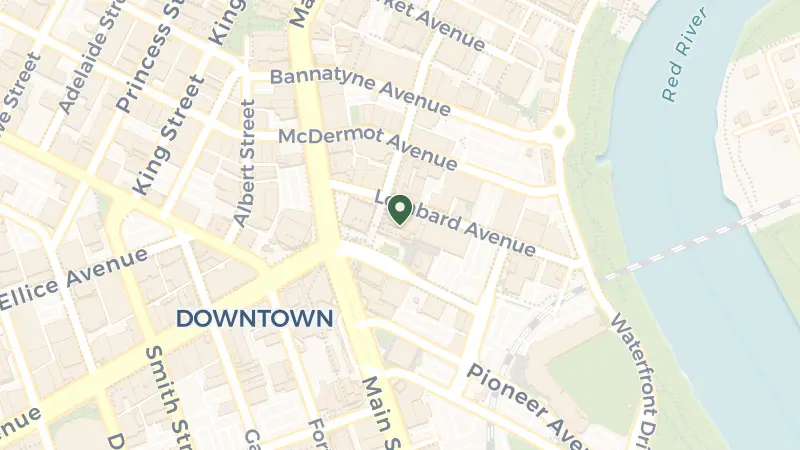
Fairmont builds on the legacies of landmark properties, and in Winnipeg, that legacy begins at the confluence of the Red and Assiniboine rivers. The city's name comes from the Western Cree for "muddy water", and these waterways have shaped the character of the place since long before European contact, when this was already a vital trading centre for Anishinaabe, Cree, Oji-Cree, Dene, and Dakota peoples. The birthplace of the Métis Nation, Winnipeg grew around Fort Rouge, established by French traders in 1738, and later expanded with the arrival of the Selkirk settlers in 1812. Today, it stands as the sixth-largest city in Canada, a railway and transportation hub known as the Gateway to the West.
The property sits between two neighbourhoods that define Winnipeg's cultural breadth: the Exchange District, with its warehouse architecture and arts scene, and St. Boniface, the largest francophone community in Western Canada. Across the Red River, St. Boniface Cathedral and Boulevard Provencher anchor a district where French is the living language of the streets, cafés, and markets. The Provencher Bridge and the striking cable-stayed Esplanade Riel connect these two halves of the city, making the walk between them a study in contrasts.
The Forks Market lies just over a kilometre south, where the two rivers meet. This historic gathering place, used for 6,000 years as a meeting point, now houses local vendors, craft stalls, and the kind of market buzz that feels both contemporary and rooted. Winnipeg James Armstrong Richardson International Airport is eight kilometres west, a quick drive into the city centre.
The Forks is the essential starting point. Walk the Riverwalk Trail along the Assiniboine and Red, or explore the indoor market for bannock, bison tourtière, and preserves from Prairie farms. In winter, the rivers freeze solid, and locals skate the Red River Mutual Trail, one of the world's longest naturally frozen skating paths. The Festival du Voyageur, held each February in St. Boniface, celebrates the fur-trading past with outdoor concerts, snow sculptures, and pea soup served in the cold. Book a table at one of the French bistros along Boulevard Provencher for tourtière and sugar pie in a language you may not hear again until Québec.
The Royal Canadian Mint, less than three kilometres northeast, produces all of Canada's circulation coins and offers tours of the striking process. FortWhyte Alive, a nature reserve ten kilometres south, features bison herds, interpretive trails, and birdwatching platforms over restored wetlands. In summer, the Winnipeg Folk Festival and Jazz Winnipeg Festival draw international acts, while the Fringe Theatre Festival takes over the Exchange District with street performances and experimental theatre. Don't miss a stroll through the Exchange itself: early 20th-century warehouses now hold galleries, cafés, and boutiques, their terracotta façades unchanged since the city's boom years.
Winnipeg's continental climate is extreme by any measure. Winter is long and unyielding: January sees highs around minus eleven and lows near minus twenty, with snow cover from November through March. The air is sharp, the light brilliant against white, and locals embrace it with festivals, skating, and a certain prairie stoicism.
Spring arrives slowly, with April still flirting with frost and May finally pushing temperatures above the teens. By June, the city shifts entirely: summer days climb to the mid-twenties, and thunderstorms roll in with prairie drama. July and August are warm and green, ideal for river walks, outdoor festivals, and long twilight hours.
Autumn is brief but striking. September brings cooler air and golden light, and by October, the leaves have turned and fallen. November ushers in the first serious cold, and the rivers begin their freeze. The best time to visit is late May through early September for warm-weather experiences, or mid-winter if you want to see the city at its most characterful.
Frequently Asked Questions
Free service · No obligation
Request a Quote